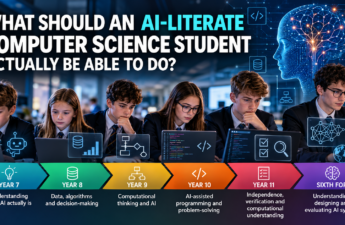
CS – AI – The Student As Computer Science teachers, we have a responsibility to ensure that students understand artificial intelligence, not simply how to use it. There is a significant difference between a student who can write an effective prompt and one who understands why an AI system produces a particular response, recognises its limitations and can evaluate its…
Category: Blog
Your blog category
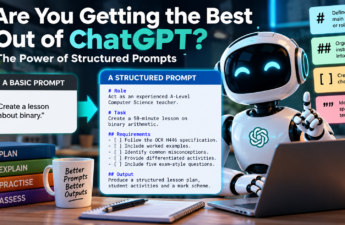
Are You Getting the Best Out of ChatGPT? The Power of Structured Prompts
How to win with AI Many people use ChatGPT every day, but how many actually consider the way they structure their prompts? I’ve been exploring how small changes to the way we communicate with AI can make a significant difference to the quality of the responses we receive. One particularly useful technique is to borrow some simple formatting conventions from…
Finding Space to Breathe: Painting, Mental Health and the Joy of Learning Something New
Why picking up a paintbrush reminded me that making time for a hobby can be part of looking after ourselves. When did we stop making time for ourselves? Somewhere between work, family responsibilities and the seemingly endless demands of everyday life, it becomes remarkably easy to forget that we are allowed to do things simply because we enjoy them. Not…
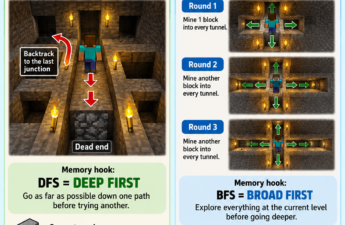
Teaching Graph Traversal Through Minecraft: Making DFS and BFS Finally Make Sense
Minecraft for the win… Breadth-first search. Depth-first search. Stacks. Queues. Backtracking. For students encountering graph traversal for the first time, there is a lot of terminology to absorb before they have necessarily developed a picture of what the algorithms are actually doing. And that is often the problem. A student can learn that depth-first traversal uses a stack and breadth-first…
Read my Article in Hello Word Magazine Issue 30
I’m pleased to share that my article, “Can AI tools help to mark A-level coursework?”, has been published in Issue 30 of Hello World magazine. Download Here The article explores an experiment I carried out using AI as a second marker for A-level Computer Science coursework. I wanted to find out whether a carefully designed AI system could review student…
A £2 Reminder That Every PhD Journey Starts SomewhereRight Place, Right Time – Fate Smiles
On 15 March 2026, while browsing a local charity shop, I came across a copy of How to Get a PhD: A Handbook for Students and Their Supervisors by Estelle M. Phillips and D. S. Pugh. What made the moment slightly surreal was that only a few weeks ago I had been looking at buying this exact book online for…
🎧 A-Level Computer Science Podcast – Supporting Student Revision
🎧 A-Level Computer Science Podcast – Supporting Student Revision Over the past year I’ve been building something alongside my teaching that I hope will genuinely help students. I’ve created an A-Level Computer Science revision podcast designed specifically for OCR and AQA students, breaking down complex topics into clear, structured explanations that students can revisit whenever they need. Each episode focuses…
The Curriculum Review Misses the Point: Why “Computing” Deserves Better
Flawed Report – Flawed Understanding – Disapointing By Aaron Connor – Teacher of ComputingPublished: November 2025 The Report November 2025 The government’s new Curriculum and Assessment Review: Building a World-Class Curriculum for All claims to set a vision for the future of education in England. But for Computing teachers, it reads like a document written about our subject by people…
The Power of Body Language
📘 Reading the Room: What Teachers Can Learn from The Power of Body Language by Joe Navarro Teaching isn’t just about words — it’s about understanding what’s not being said. In his book The Power of Body Language, former FBI agent Joe Navarro explores how nonverbal cues reveal emotions, intentions, and levels of comfort long before anyone speaks. While his…
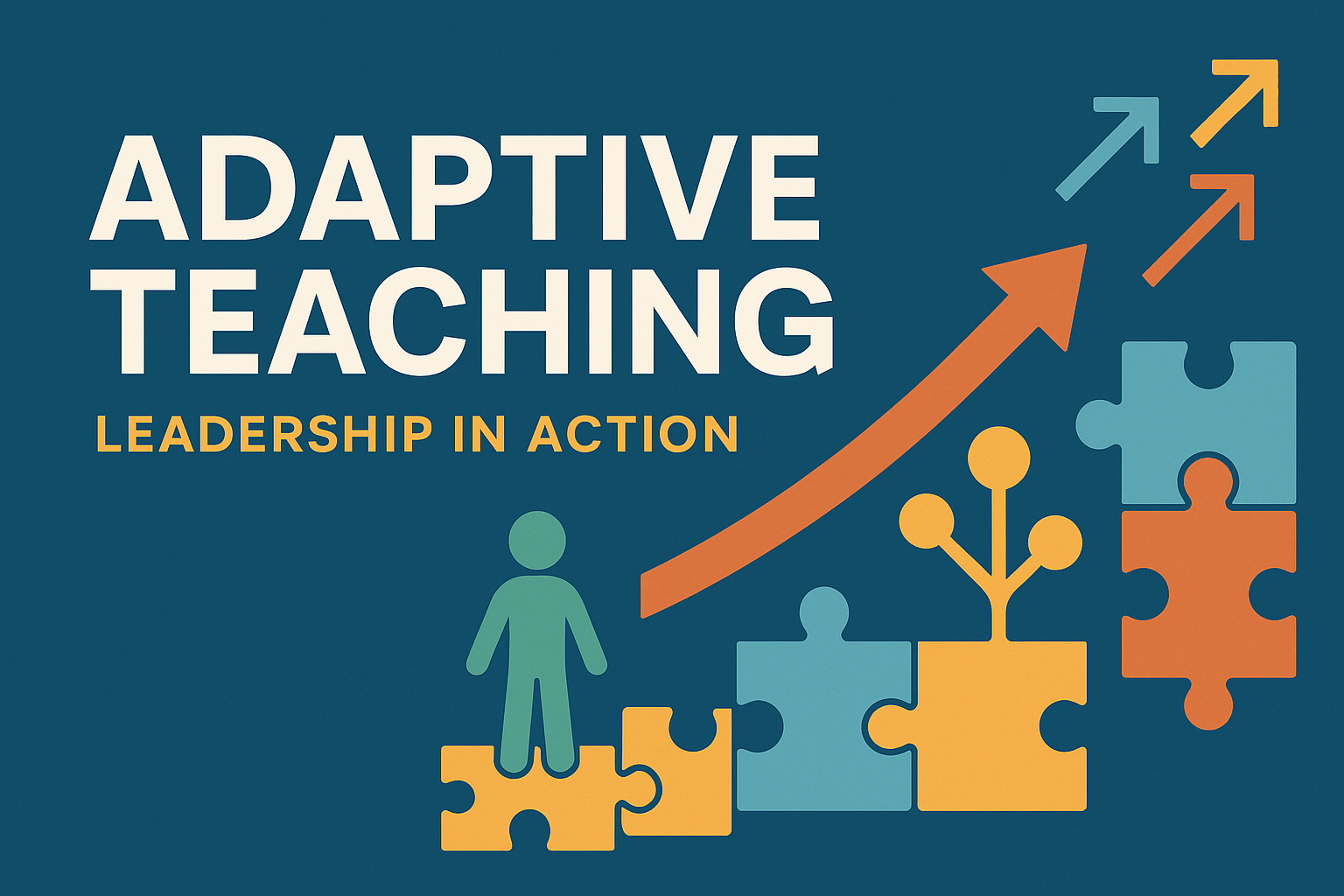
Adaptive Teaching as Strategic Leadership: From Theory to Practice
Change for the better. In modern education, “knowing your class” is no longer enough. Learners differ not just in prior knowledge, but in processing speed, learning preferences, motivation, confidence, and even emotional state. For educational leaders, the challenge is: how do we build a school culture where teachers are empowered and equipped to adapt in the moment, rather than rigidly…